Play the major chord on guitar
The major chord is a triad composed of three notes: a root, a major third and a perfect fifth. This structure produces a stable and consonant sound, widely used in all musical styles.
Chord composition
| I | III | V |
| Root | Major third | Perfect fifth |
| 0 | 4 | 7 |
Formula 1 - 3 - 5
Theory
The major chord is built by stacking two thirds: a major third (4 semitones) followed by a minor third (3 semitones). This stacking creates a perfect fifth interval (7 semitones) between the root and the fifth. The 1-3-5 formula is universal: C major = C-E-G, D major = D-F♯-A, etc.
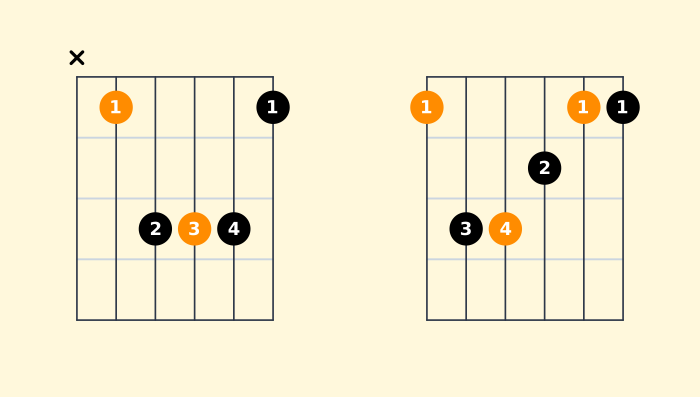
Play the major chord on the guitar
Styles
Theoretical construction
Major chord is Western harmony's cornerstone. Formula 1 - 3 - 5: root, major third (4 semitones), perfect fifth (7 semitones).
Example C major: C - E - G. Major third (C-E) + minor third (E-G) creates characteristic bright sound.
Acoustically, frequencies form simple ratio (4:5:6), explaining natural consonance and "stable", "cheerful" perception.
Learning
Week 1 - Placement
- Place fingers slowly
- Check each string
- Repeat 10 times, 5 seconds
Week 2-3 - Fluency
- C ↔ G transitions
- Metronome 60-100 BPM
- 10 minutes daily
Week 4+ - Application
- Songs with 3-4 chords
- Backing tracks
- Recording analysis
How to play
Open positions
Technique
Fingers perpendicular, just behind frets. Firm pressure without excess tension. Thumb center back neck.
Barre positions
E-shape: index barres all strings. Move along neck for all major chords.