Play the dominant seventh chord on guitar
The dominant seventh chord, simply notated 7, is a four-note chord formed by a major triad and a minor seventh. It creates strong tension that resolves to the tonic.
Chord composition
| I | III | V | ♭VII |
| Root | Major third | Perfect fifth | Minor seventh |
| 0 | 4 | 7 | 10 |
Formula 1 - 3 - 5 - ♭7
Theory
The dominant seventh chord adds a minor seventh (10 semitones) to the major triad. C7 = C-E-G-B♭, G7 = G-B-D-F. The tritone formed between the third and seventh (E-B♭ in C7) creates dissonance requiring resolution. The fifth is often omitted in tight voicings.
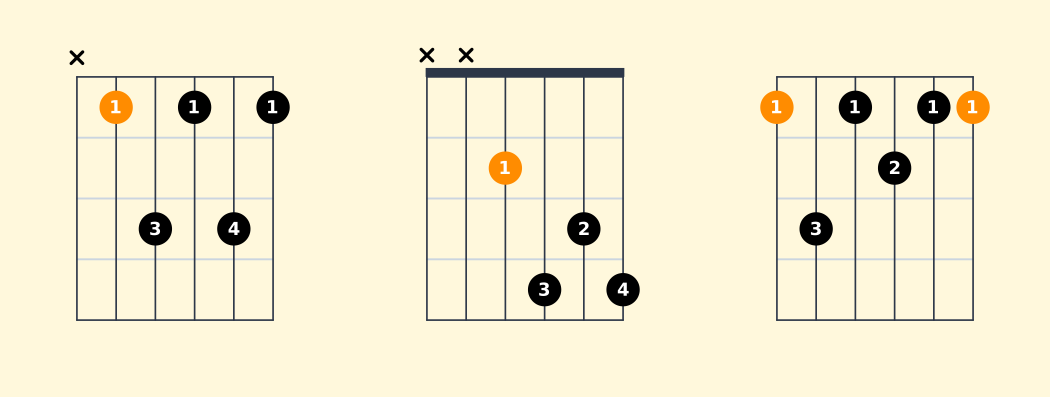
Play the dominant seventh chord on the guitar
Styles
7th chord construction
Formula 1 - 3 - 5 - 7b: major triad + minor seventh (10 semitones). Example C7: C - E - G - Bb. Minor seventh creates tension requiring resolution.
Learning
1) Master open positions 2) V7-I progressions (G7-C, D7-G) 3) 12-bar blues (I7-IV7-V7) 4) Jazz rootless voicings.
How to play
Open positions (E7, A7, D7) and barres. Often used as dominant chord (V7) resolving to tonic. Jazz: rootless voicings.