E♭ Major pentatonic Scale - Guitar
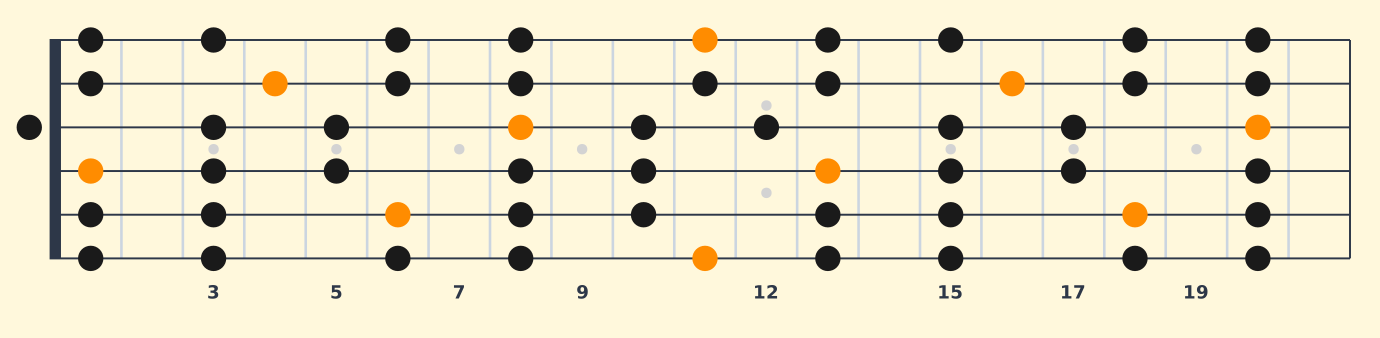
The 5 Positions on the Fretboard
Pentatonic scales can be played in 5 different positions along the fretboard. Each position offers a different sound and technical possibilities. Mastering these 5 positions will allow you to play the scale across the entire guitar neck and develop your musical vocabulary.
Position 1
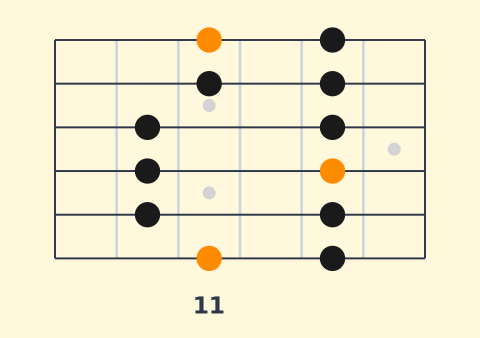
Position 2
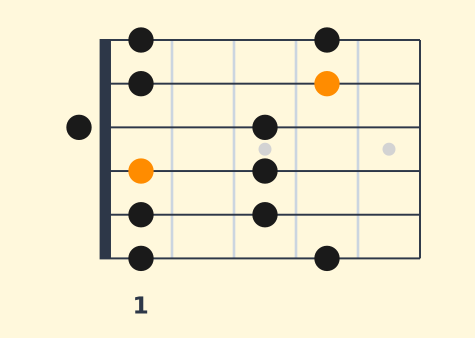
Position 3
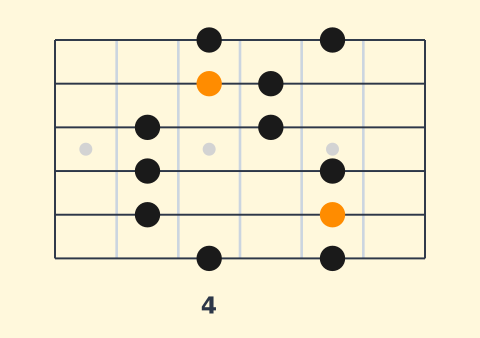
Position 4
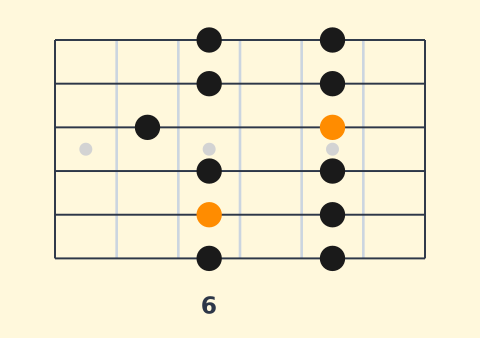
Position 5
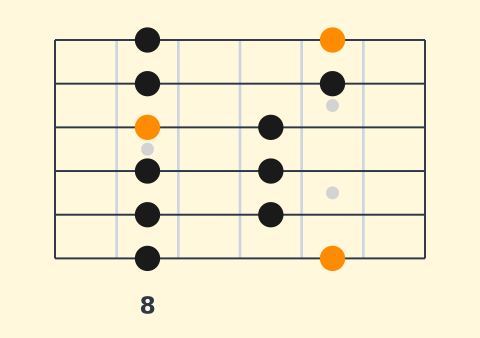
Intervals table
| I | II | III | IV | V |
|---|---|---|---|---|
| Root | Major second | Major third | Perfect fifth | Major sixth |
| E♭ | F | G | B♭ | C |
| — | +2 | +2 | +3 | +2 |
What is the Major Pentatonic Scale?
The major pentatonic scale is a 5-note scale with a cheerful and bright character, derived from the major scale. Composed of degrees I, II, III, V, and VI, it eliminates the perfect fourth (IV) and major seventh (VII) to create an open and consonant sound. On the guitar, this scale is extremely versatile and found in all musical styles, from folk to rock through country and blues. It is the relative major of the minor pentatonic - for example, C major pentatonic contains the same notes as A minor pentatonic. Its apparent simplicity hides a melodic richness that makes it an essential tool for composition and improvisation.
Construction and Music Theory
The major pentatonic scale is built by taking 5 notes from the major scale: the tonic (I), major second (II), major third (III), perfect fifth (V), and major sixth (VI). By omitting degrees IV and VII, it intentionally avoids the semitones present in the major scale, creating a scale where each interval is at least a whole tone. The minor third intervals (a tone and a half) between degrees III-V and VI-I give this scale its particular character and open sound. This intervallic structure explains why it always sounds harmonious - no note creates strong dissonance with the tonic. It is relative to the minor pentatonic (same set of notes, different tonic) and forms the basis of many traditional melodies around the world.
How to Play the Major Pentatonic Scale on Guitar
On guitar, the major pentatonic is played in 5 main positions covering the entire neck. The most common position in C major starts on the low E string, 8th fret (or 3rd fret in open position with open strings). This scale is particularly suited for double-stops (two simultaneous notes) and bends, creating that characteristic country and blues sound. Practice hammer-ons and pull-offs to create fluid and melodic phrasing. Country guitarists extensively use this scale with chicken picking and expressive bends. To develop mastery, work the 5 CAGED positions and learn to connect them fluidly. This scale pairs perfectly with major chords and I-IV-V progressions, creating bright and optimistic solos that work over the entire chord progression.
Practical Applications and Famous Pieces
The major pentatonic is omnipresent in world popular music. From traditional folk songs like 'Amazing Grace' to rock hits like 'My Girl' (The Temptations), it creates instantly recognizable and memorable melodies. In country, it's the basis of almost all guitar solos, with its characteristic bends and distinctive twang. The Beatles used it abundantly in their pop melodies ('Hey Jude', 'Let It Be'). In blues, it combines with the minor pentatonic to create typical major-minor balance. This scale works perfectly over I-IV-V and I-V-vi-IV progressions. In improvisation, it's ideal for creating positive and energetic solos over major backing tracks. Traditional music worldwide (Chinese, Japanese, Scottish, African) extensively uses major pentatonic scales.
Tips and Common Mistakes to Avoid
When learning the major pentatonic on the guitar, don't consider it a simplified version of the major scale, but as a complete scale with its own character. Vary your phrasing to avoid falling into predictable patterns - use interval jumps rather than linear movements. Practice bends (especially on the major third) to add country/blues expressiveness. Listen to how genre masters use this scale: Albert Lee in country, B.B. King in blues, George Harrison in rock. Combine it with its relative minor to create varied colors in your solos. Work all 5 positions across the neck to play in any register. Use a metronome but focus on groove and natural phrasing. Record yourself regularly to evaluate your musicality and correct technical weaknesses.
Related Scales and Modes
The major pentatonic is intimately connected to several scales. It is the relative major of the minor pentatonic - C major pentatonic contains exactly the same notes as A minor pentatonic. It's derived from the major scale by omitting degrees IV and VII. By adding the perfect fourth (IV), you get the major hexatonic scale, useful for creating resolved tensions. The major pentatonic can be seen as the skeleton of Ionian and Lydian modes. In advanced improvisation, you can superimpose different major pentatonics over the same chord to create extensions (for example, playing D major pentatonic over a C chord creates extensions 9, #11, 13). To enrich your sonic palette, alternate between major pentatonic and complete major scale depending on harmonic context and desired expression.
Frequently Asked Questions
What's the difference between major and minor pentatonic?
The main difference lies in the intervals from the tonic. The major pentatonic contains a major third (I-II-III-V-VI) creating a joyful character, while the minor pentatonic contains a minor third (I-♭III-IV-V-♭VII) creating a melancholic character. They are relative to each other - C major pentatonic and A minor pentatonic share the same notes (C-D-E-G-A) but with different tonics. This relationship allows easy switching between the two emotional colors in improvisation.
Why does the major pentatonic sound so good?
The major pentatonic avoids the semitones present in the major scale (between III-IV and VII-I) by omitting degrees IV and VII. This creates a scale where all intervals are at least a tone, eliminating strong melodic tensions. Result: all notes sound consonant together and can be played in any order without creating major dissonance. This property makes it ideal for beginner improvisation and explains its presence in traditional music worldwide.
In which musical styles is the major pentatonic used?
The major pentatonic crosses all musical styles. It's fundamental in country (guitar solos with bends), folk (traditional melodies), pop (catchy melodic hooks), classic rock (riffs and solos), blues (mixed with minor pentatonic), gospel and spiritual, Celtic music, traditional Asian music (Chinese, Japanese), and many African music styles. Its versatility and universal character make it one of the most used scales in the world.
How to combine major and minor pentatonic?
Combining both pentatonics is a powerful technique used in blues and rock. Over a C7 chord (blues), you can alternate between C major pentatonic (for bright passages) and C minor pentatonic (for bluesy passages). Common notes (C, G) serve as pivots. This technique creates the characteristic major-minor contrast of blues. Start by clearly establishing one scale, then gradually introduce notes from the other. Listen to how B.B. King, Eric Clapton, or Stevie Ray Vaughan masterfully blend both pentatonics.
Should you learn all 5 positions of the major pentatonic?
Learning all 5 positions across the neck is essential to becoming a complete improviser. Each position offers different melodic possibilities and varied registers. The CAGED system organizes these positions logically. Start with the most comfortable position (often the C-shape position), then gradually learn the others by connecting them. Once mastered, you can navigate freely across the entire neck, creating solos that explore different tonal zones rather than staying stuck in one position.