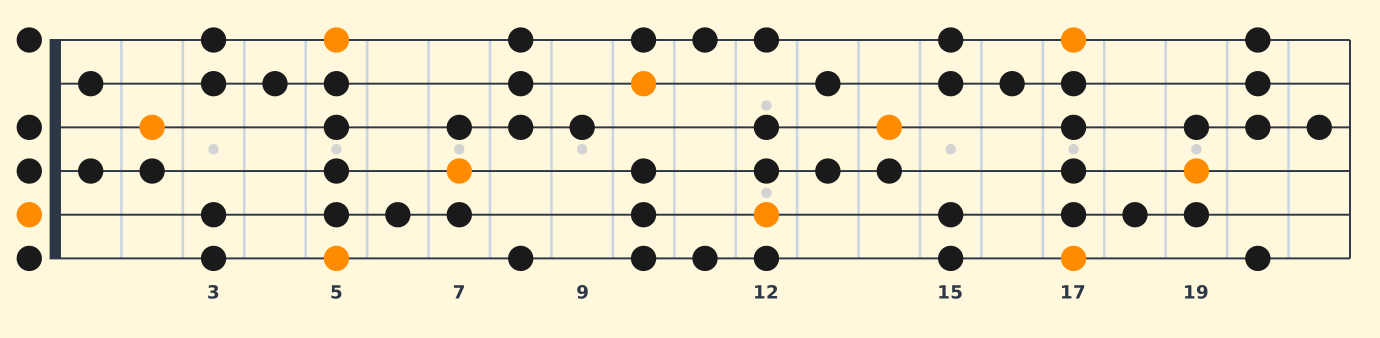
Play the blues scale on the guitar
The blues scale adds the famous 'blue note' to the minor pentatonic, creating that characteristic tension that defines the blues sound. It's the scale that shaped all modern music.
Intervals table
| I | II | III | IV | V | VI |
|---|---|---|---|---|---|
| Root | Minor third | Perfect fourth | Augmented fourth | Perfect fifth | Minor seventh |
| 0 | 3 | 5 | 6 | 7 | 10 |
| — | +3 | +2 | +1 | +1 | +3 |
Theoretical construction
The blues scale combines the minor pentatonic (I, ♭III, IV, V, ♭VII) with the crucial addition of the ♭5 (diminished fifth). This note creates a tritone (3-tone interval) with the tonic, producing the characteristic blues tension. In practice, blues musicians often play this passing note between the IV and V, or use it as a tension note resolving to the perfect fifth. The blue note can also be approached through bends from the fourth, an emblematic blues guitar technique.
Position examples
Example with A Blues