F♯ Minor pentatonic Scale - Charango
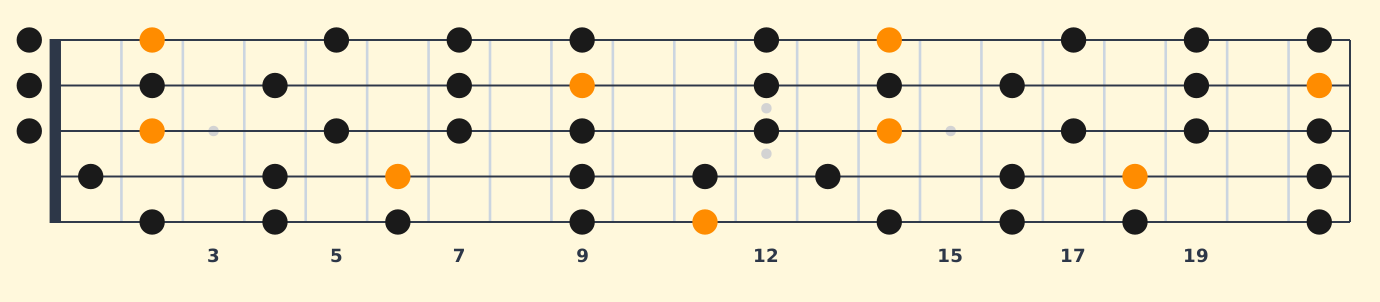
Intervals table
| I | II | III | IV | V |
|---|---|---|---|---|
| Root | Minor third | Perfect fourth | Perfect fifth | Minor seventh |
| F♯ | A | B | C♯ | E |
| — | +3 | +2 | +2 | +3 |
What is the Minor Pentatonic Scale?
The minor pentatonic scale is THE scale for blues and rock. With its 5 carefully selected notes (I, ♭III, IV, V, ♭VII), it allows creating powerful and expressive solos that always sound good. On the charango, this scale is extremely versatile as it avoids dissonant notes by omitting degrees II and VI. It's the preferred scale of rock and blues guitarists because every note sounds good over any chord in the key. Its apparent simplicity hides infinite expressive depth, allowing you to play from authentic blues to the most aggressive hard rock.
Construction and Music Theory
The minor pentatonic scale selects 5 notes from the natural minor scale: the tonic (I), minor third (♭III), perfect fourth (IV), perfect fifth (V), and minor seventh (♭VII). By omitting degrees II and VI, it eliminates second intervals that can create dissonance. This scale is the relative minor of the major pentatonic - they share the same notes but with different tonics. For example, A minor pentatonic and C major pentatonic contain the same notes. The minor third intervals between I-♭III and the tone-and-a-half intervals between IV-V and ♭VII-I create that characteristic open and bluesy sound.
How to Play the Minor Pentatonic Scale on Charango
The charango and minor pentatonic form a natural combination as Andean music frequently uses pentatonic scales. The charango's double strings enrich pentatonic melodies with their natural chorus effect. This scale pairs perfectly with huayno and carnavalito rhythms. The 5 notes allow rapid ornamentations and note cascades typical of Andean style. Alternate between plucked notes and rasgueados to create varied textures while staying within this simple but expressive scale.
Practical Applications and Famous Pieces
The minor pentatonic is omnipresent in rock, blues, metal, and hard rock. Legendary solos like 'Stairway to Heaven' (Led Zeppelin), 'Sweet Child O' Mine' (Guns N' Roses), or 'Comfortably Numb' (Pink Floyd) extensively use this scale. In blues, it forms the basis of improvisation - add bends and vibrato to get authentic blues feeling. In metal, it allows creating aggressive riffs and fast solos. This scale works over any minor chord progression (i-iv-v or i-VI-VII). It combines perfectly with the blues scale (by adding the ♭5) for more tension.
Tips and Common Mistakes to Avoid
When learning the minor pentatonic on the charango, don't fall into the trap of playing mechanically up and down. This scale demands expression - use bends, vibratos, slides, and dynamic nuances. Vary your phrasing: play in interval jumps rather than linearly. Listen to blues and rock masters to understand how they use only 5 notes to create infinite expressiveness. Practice with a metronome but focus on groove and feeling. Learn all 5 positions across the neck to improvise anywhere. Mix this scale with the major pentatonic to create varied colors.
Related Scales and Modes
The minor pentatonic is the relative minor of the major pentatonic - A minor pentatonic contains the same notes as C major pentatonic. It's derived from the natural minor scale by omitting degrees II and VI. By adding the diminished fifth (♭5), you get the 6-note blues scale, even more expressive. The minor pentatonic can be seen as the skeleton of several modes: Aeolian, Dorian, and Phrygian share these 5 notes. To enrich your playing, combine it with the complete natural minor scale or blues scale depending on musical context.
Frequently Asked Questions
Why does the minor pentatonic always sound good?
The minor pentatonic avoids second intervals (semitone and tone) that can create dissonance. By omitting degrees II and VI from the natural minor scale, it contains only consonant intervals (thirds and fourths). This means any note in the scale sounds good over any chord in the key, making improvisation much easier and safer for beginners.
What's the difference between minor pentatonic and blues scale?
The blues scale is the minor pentatonic with one addition: the diminished fifth (♭5 or blue note). The minor pentatonic contains 5 notes (I, ♭III, IV, V, ♭VII) while the blues scale contains 6 (I, ♭III, IV, ♭5, V, ♭VII). This blue note adds tension and that distinctive bluesy character. In practice, blues musicians freely alternate between the two scales depending on desired expression.
How to improvise with only 5 notes?
The richness of pentatonic improvisation comes from phrasing, rhythm, and expression, not the number of notes. Use bends to create intermediate notes, vary dynamic nuances (loud/soft), play with rhythmic placement (ahead/behind the beat), and add techniques like vibrato, slides, and hammer-ons. The greatest solos in rock history primarily use the pentatonic - it's how you play that matters, not the quantity of notes.
Over which chords to use the minor pentatonic?
The minor pentatonic works over any chord progression in its key. In A minor pentatonic, you can play over Am, Dm, Em, C, F, G - essentially all chords in the key of A minor. It also works over blues progressions (I7-IV7-V7) and typical rock progressions (i-♭VII-♭VI in minor). Its versatility makes it the safest scale for improvisation.
Should you learn all 5 positions on the neck?
Learning all 5 positions of the minor pentatonic across the neck is essential to becoming a complete improviser. Each position offers different melodic possibilities and allows playing in different registers. Start with position 1 (the box pattern), then gradually learn the others. Once mastered, you can navigate fluidly across the entire neck and create varied solos that aren't limited to one area of the neck.