D♯ Natural minor Scale - Charango
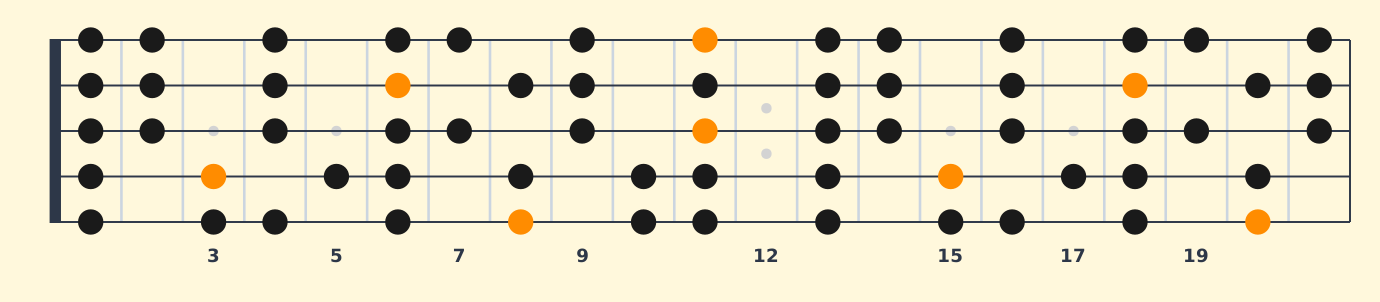
Intervals table
| I | II | III | IV | V | VI | VII |
|---|---|---|---|---|---|---|
| Root | Major second | Minor third | Perfect fourth | Perfect fifth | Augmented fifth | Minor seventh |
| D♯ | F | F♯ | G♯ | A♯ | B | C♯ |
| — | +2 | +1 | +2 | +2 | +1 | +2 |
What is the Natural Minor Scale?
The natural minor scale, also known as the Aeolian scale, is the purest and most fundamental minor scale. Composed of seven notes following the formula Tone - Semitone - Tone - Tone - Semitone - Tone - Tone, it differs from the major scale through its minor third, which gives it its melancholic and introspective character. On the charango, this scale is essential for playing in minor keys and expressing deep emotions. It is the relative minor of the major scale, meaning it shares exactly the same notes but starts on a different tonic. This relationship allows for easy modulation between major and minor modes.
Construction and Music Theory
The natural minor scale is built following a specific interval formula: Tone - Semitone - Tone - Tone - Semitone - Tone - Tone. The scale degrees are: the tonic (I), major second (II), minor third (♭III), perfect fourth (IV), perfect fifth (V), minor sixth (♭VI), and minor seventh (♭VII). The presence of the minor third (3 semitones instead of 4) is the determining element that gives the scale its minor character. This scale is the sixth mode of the major scale - for example, A natural minor contains the same notes as C major. The absence of a leading tone (major seventh) differentiates it from harmonic and melodic minor scales, creating a softer sound with less tension toward resolution.
How to Play the Natural Minor Scale on Charango
The charango, with its metallic sound and double strings, brings a particular dimension to the natural minor scale. Minor modes are very present in traditional Andean music, and this scale is fundamental for interpreting tonadas and yaravíes. The doubled strings create a natural chorus effect that enriches melancholic melodies. Start by identifying the tonic on your instrument according to the tuning used. The charango allows adding typical ornamentations like expressive vibratos and glissandos that intensify the emotional character of the minor scale. Alternate between plucked notes for melodic passages and soft rasgueados for accompaniments. The natural minor scale pairs particularly well with vidala and baguala rhythms.
Practical Applications and Famous Pieces
The natural minor scale is omnipresent in all musical styles. From classical works like Mozart's 'Requiem' to rock songs like Led Zeppelin's 'Stairway to Heaven', it expresses melancholy and emotional depth. To practice, start with simple melodies in A minor like 'Greensleeves' or 'The House of the Rising Sun'. This scale works perfectly with i-iv-v chord progressions (for example Am-Dm-Em in A minor). In improvisation, the natural minor scale is ideal over minor backing tracks to create dark and contemplative atmospheres. It also pairs very well with the minor pentatonic scale to create solos balanced between simplicity and harmonic richness. In metal and progressive rock, it forms the basis of many riffs and progressions.
Tips and Common Mistakes to Avoid
When learning the natural minor scale, focus on expressing the emotional character of the scale on the charango. The most common mistake is playing mechanically without bringing out the minor color. Always use a metronome but don't forget the expressive aspect - minor scales require more dynamic nuance than major ones. Listen carefully to the minor third and minor sixth, these intervals that define the scale's character. Sing the scale while playing it to internalize its specific intervals. Vary your exercises: play ascending and descending, in thirds, in sequences, and in different rhythms. Also work the chords of the minor key (i, ii°, ♭III, iv, v, ♭VI, ♭VII) to understand the harmonic context. Record yourself regularly to evaluate your emotional expression and intonation.
Related Scales and Modes
The natural minor scale is intimately connected to several other scales. It is the relative minor of the major scale located a minor third above - for example, A minor and C major share the same notes. By modifying certain degrees, you can explore harmonic minor (with major seventh) and melodic minor (with major sixth and seventh ascending). The natural minor scale is also identical to the Aeolian mode, the sixth mode of the major scale. To enrich your sonic palette, explore the minor pentatonic scale (I, ♭III, IV, V, ♭VII), a five-note simplified version widely used in blues and rock. The minor blues scale adds the diminished fifth (♭5) to create characteristic blues tension. Also understand relationships with other modes: it shares its notes with Dorian mode (which has a major sixth) and Phrygian mode (which has a minor second).
Frequently Asked Questions
What's the difference between natural, harmonic, and melodic minor?
The natural minor scale uses only the notes of its relative major without modification. Harmonic minor raises the seventh by a semitone (major seventh instead of minor), creating a characteristic augmented second interval between the minor sixth and major seventh. Melodic minor raises both the sixth and seventh ascending (creating a sound close to major), then descends following natural minor. Each variant has its own character: natural is soft and melancholic, harmonic is exotic and tense, melodic is versatile and fluid.
How do you find the relative minor of a major scale?
To find the relative minor of a major scale, descend a minor third (three semitones or a tone and a half) from the major tonic. For example, the relative minor of C major is A minor. Conversely, the relative major of a minor scale is found a minor third above. These two scales share exactly the same notes and the same key signature, but start on different tonics, which creates distinct tonal centers and emotional colors.
Why does the natural minor scale sound sad?
The melancholic character of the natural minor scale comes mainly from its minor third (3 semitones instead of 4 for the major third). This smaller interval creates a different harmonic tension that is culturally associated with sadness in Western music. The minor sixth and minor seventh reinforce this dark color. It's important to note that this emotional association is partly cultural - in other musical traditions, minor modes are not necessarily perceived as sad. Nevertheless, in Western music, composers systematically use minor scales to express melancholy, introspection, gravity, or mystery.
In which musical styles is the natural minor scale used?
The natural minor scale is universal and crosses all musical styles. It is fundamental in classical music (notably Baroque and Romantic), in rock and metal (for dark and powerful riffs), in blues and jazz (often mixed with other minor scales), in folk and Celtic music, in flamenco, and in many traditional world music styles. Metal in particular intensively exploits minor scales to create dark and aggressive atmospheres. Film music frequently uses minor modes for dramatic or melancholic scenes. Each style brings its own interpretation and use of this fundamental scale.
How do you improvise with the natural minor scale?
To improvise effectively with the natural minor scale, start by familiarizing yourself with its positions across the entire fretboard. Learn to hear the characteristic intervals, particularly the minor third and minor sixth. Practice over backing tracks in minor keys, emphasizing important notes: the tonic, minor third, and fifth. Vary your phrasing using techniques like bends, hammer-ons, pull-offs, and slides. Mix the natural minor scale with the minor pentatonic for more freedom. Study solos by guitarists like David Gilmour (Pink Floyd) or Jimmy Page (Led Zeppelin) who excel in expressive use of minor scales. The most important aspect is emotional expression - minor scales require feeling and dynamics.